When Time Becomes a Raw Material
Durational artwork and collaborating with Time

More and more, I think a lot about my art materials. Their sustainability, yes, and how and where I’m acquiring them. I use paper and paint, fabric and cardboard, needle and thread. I use found materials, wire and beads. I’ve even begun to forage and use plants from my landscape. But over the years, I’ve come to realize that one of my most important materials is something far less tangible.
Time.
I’m not talking about time in terms of how many hours a day I spend in the studio, or how well I spend my time (see here for a discussion about trying to better curate my life). I’m not even talking exactly about the speed at which I work, though slow making has provided me many, many benefits. Instead, I’m talking about capital-T Time itself as a raw material, as something gathered, accumulated, layered, and embedded into the work.
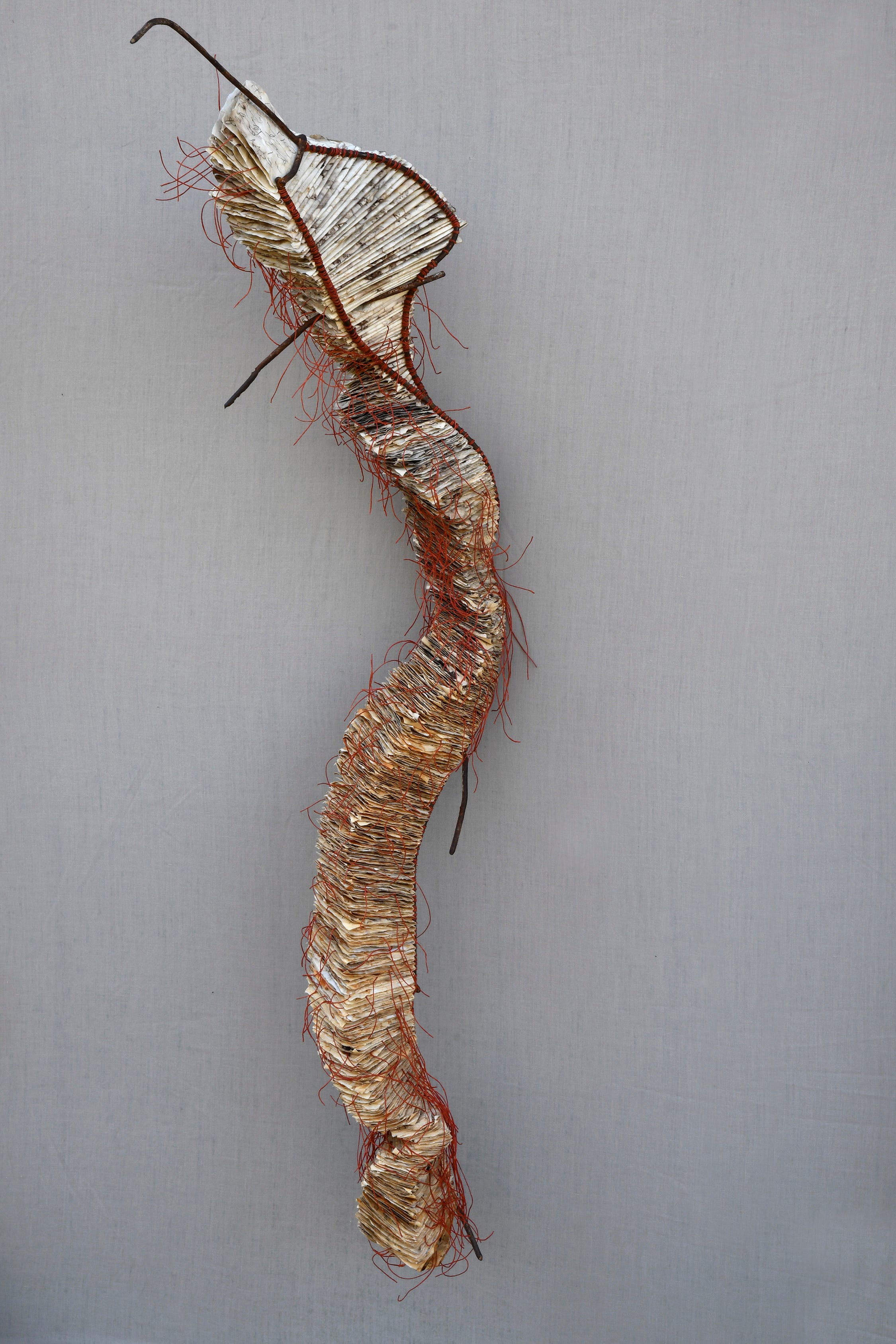
A few years ago, I created a work called Catharsis. The piece is an elongated Coptic-bound book, made up of hundreds of individual book signatures. I grief journaled into one signature a day and bound it to a salvaged metal framework. The piece grew slowly over nearly a year, literally converting my own grief and anxieties into artwork. The physical labor was repetitive and slow. But what mattered wasn’t simply the minutes and hours required to make it. The work embodied a year of living, a year of recording thoughts, a year of accumulating experiences that were then transformed, one signature at a time, into something new. The piece wasn’t made from just paper and thread. It was made from lived time.
I’ve become increasingly aware that much of my work functions this way.
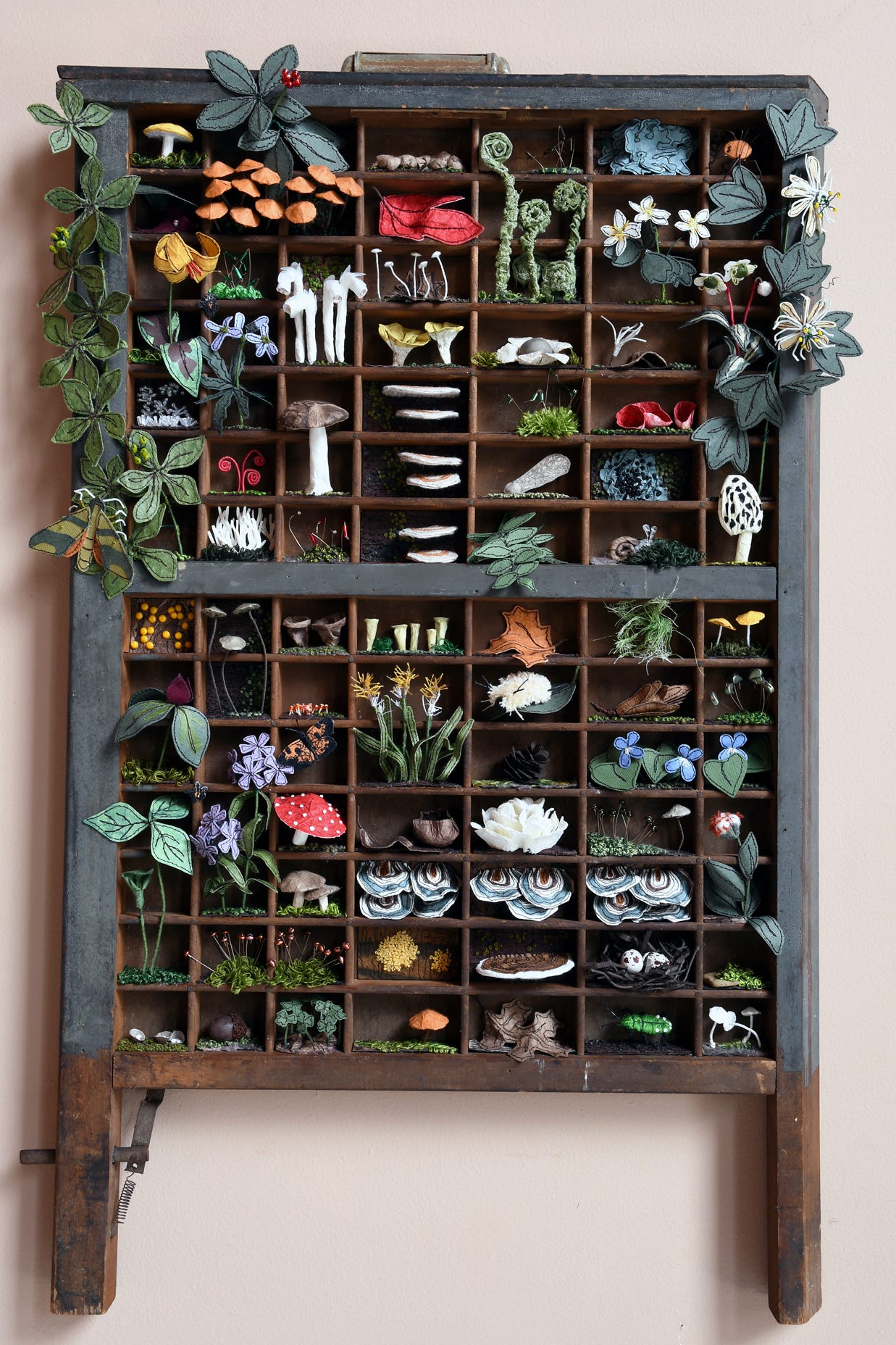
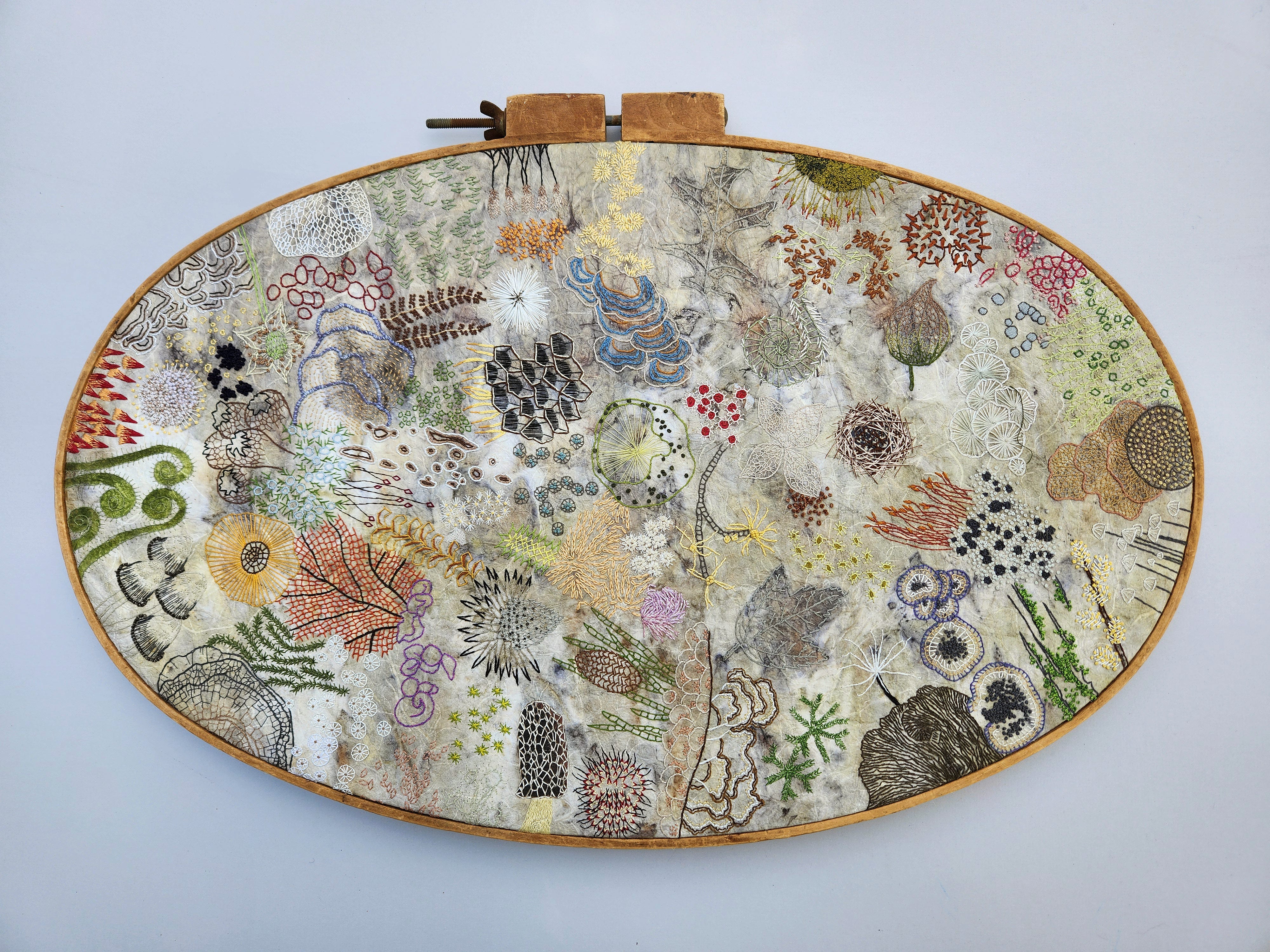
The first artwork I made that was explicitly and intentionally created over time was my Forest Sampler, assembled in an old printer’s tray, containing dozens of small bits of the forest recreated in stitched paper and hand embroidery: plants, mushrooms, mosses, and more. I worked on one small niche a day. The finished piece represents not a place observed once, but a place observed repeatedly through time. It collapses time, since the things that are depicted simultaneously in the piece appear at different times throughout the year in the real forest.
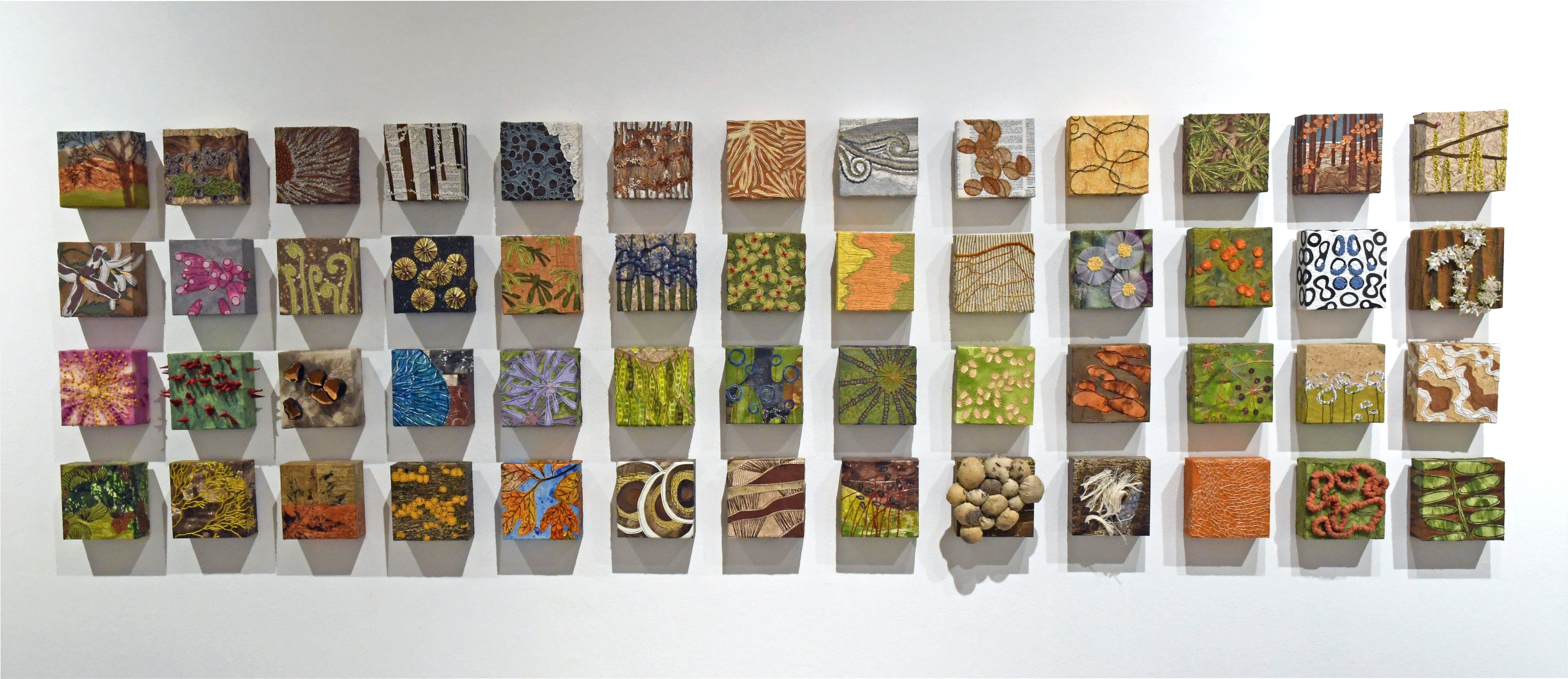
I explored this idea even more explicitly in The Tuesday Project. For an entire year, I committed to making one small artwork every Tuesday. The rules were simple (create one small block each week, based on something I saw in nature that week), but the project quickly became an exercise in paying attention to time.
The Tuesday Project unfolded week by week. The cadence mattered. Every seven days I returned to the studio and responded to whatever was present in my life and landscape at that particular moment. The work accumulated one piece at a time, much the way a year itself accumulates one week at a time.
Looking back, the finished collection functions almost like a visual calendar. Seasonal changes and colors appear naturally. Interests emerge, linger, and evolve. Some weeks I spent a lot of time on a block; other weeks less. The project became a record not only of what I was making but of where I was in time.
The individual blocks stand on their own as artworks, but the deeper artwork was the year-long commitment itself. Missing a week would have changed the project. Rushing ahead and making a month’s worth of pieces at once would have changed it as well. Its meaning depended on the steady passage of days and seasons. Time was not simply the backdrop against which the work was made. It was one of the materials from which the work was constructed.
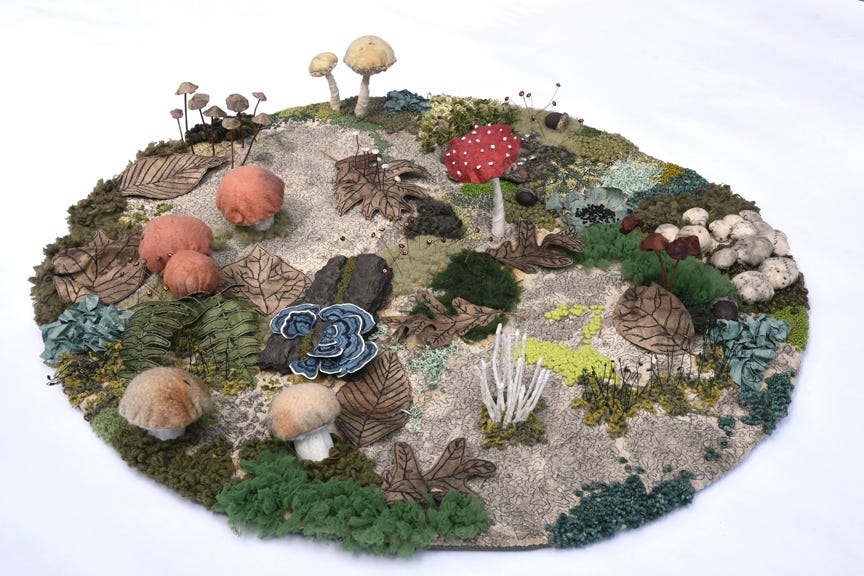
The same is true of Forest Floor. That work grew from reading the book The Forest Unseen by David George Haskell. The book is divided in 43 short chapters ordered by date and roughly covering a whole year. In each of them Haskell, who visits almost every day a single square meter of randomly chosen old-growth forest, describes what happens to plants, animals and insects living there.
In response to the book, I decided to create my own patch of forest floor over the course of a year. I started with an upcycled linen tablecloth, which I eco-printed with leaves and machine quilted. I challenged myself to add one small forest floor element to the quilted linen each day: a patch of hand-embroidered moss with beaded sporophytes, a group of sculpted paper mushrooms, a quilted leaf made from eco-dyed used coffee filters, lichen made by stitching and melting green netting left over from wrapping presents, or a piece of fallen log made from recycled paper pulp in a hand-made mold. The piece progressed slowly, intuitively, and features some of my favorite things I find on my walks in the forest: ferns, acorns, lichen and mosses, and mushrooms of all kinds.
The longer I work, the more I find myself drawn to projects that unfold over months and years rather than days and weeks, and work that is broken down into discrete units, and made in discrete units of time.
Perhaps no piece demonstrates this more clearly than Portrait of Place: Lost Lake.
The work uses time in two different ways. It contains hundreds of small, embroidered doodles: I made one doodle per day for 100 (nonconsecutive) days. But each doodle is based on one of my many photographs of nature collected from a single landscape over the last eight years. It attempts to answer a question that has long interested me: How do you make a portrait of a place? Not a snapshot, but a portrait. A photograph captures an instant. A portrait requires familiarity. It requires relationship. It requires time.
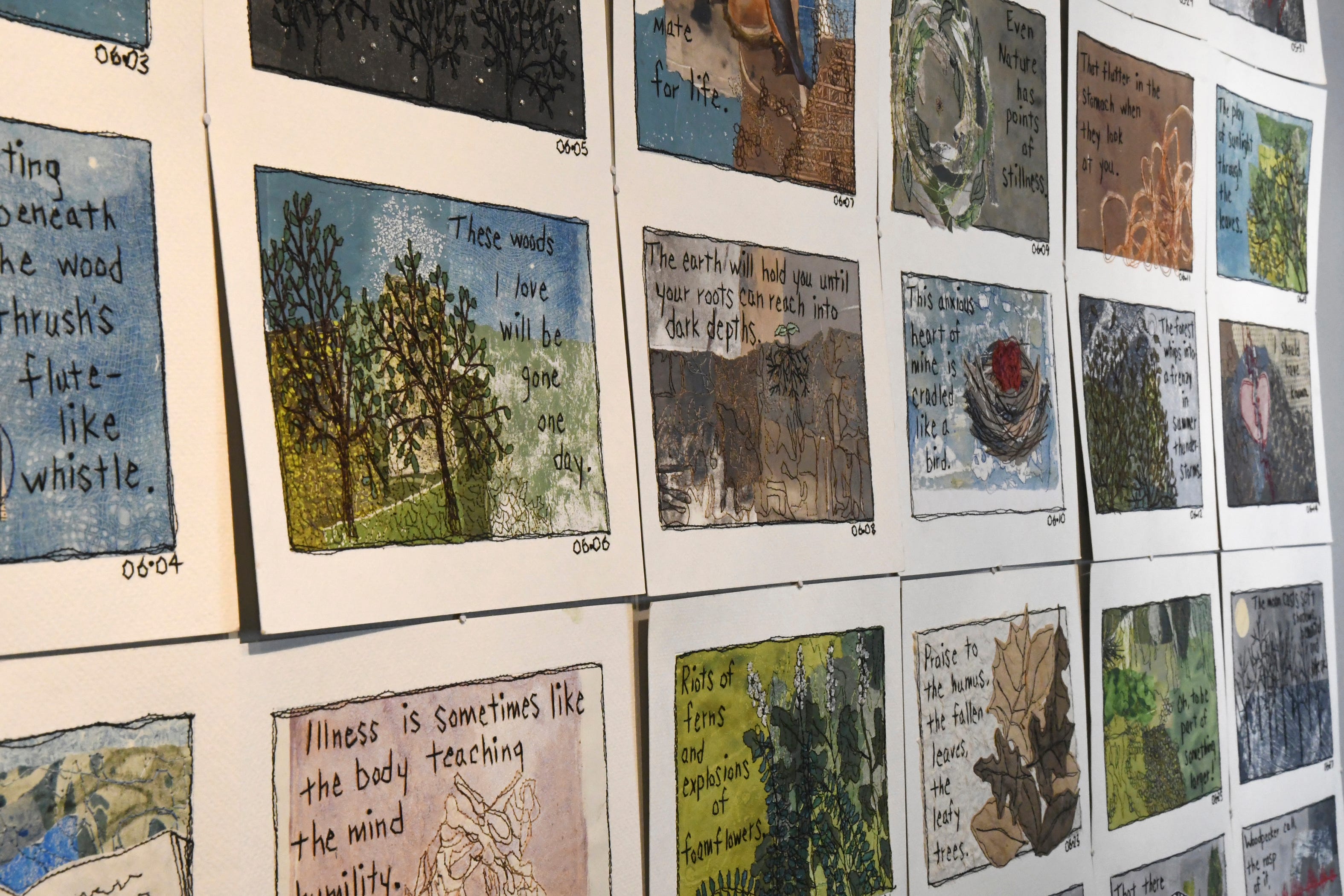
Sometimes extended time is necessary for a different reason. The artwork that might be the most important to me is my artist book To Know This Place. The book pages are a series of small paper quilts, made over the course of two years, each inspired by a specific spot along my favorite walk in my woods. As I worked on it, I began to realize that I was mapping the place, both geographically and temporally.
A single walk can introduce us to a landscape, but it cannot reveal it. To know a place requires witnessing it repeatedly: the first spring wildflowers emerging from the leaf litter, the abundance of summer, the seedheads of autumn, the exposed architecture of winter trees. It requires noticing what returns and what disappears, what blooms for only a few days, what remains unchanged, and what shifts almost imperceptibly over time.
The book became a record of those encounters. Each page reflects a particular moment, yet together they formed something larger, a portrait not just of a woods, but of a relationship with that woods. The finished book contains paper, thread, ink, and paint, but it also contains hundreds of walks, countless observations, and many years’ worth of attention. Without that passage of time, the work could not exist.
I am currently in the middle of a project that will probably take me years. In May 2024, I undertook a project I call Poetry Daily, writing a draft of a poem every day for an entire year. At the outset, I thought the project was about productivity and discipline. But now I see that the project is also an exploration of time as a creative material.
At a poem a day, three hundred and sixty-five poem drafts are written over the course of a year, and the poems, taken together, comprise a diary of sorts of one particular year in my life.
The project required me to show up repeatedly, regardless of whether I felt inspired. Some of the poems arrived almost complete. Most are just thoughts and phrases, the beginnings of ideas, or lines. Some poems emerged from events in my life: seasonal observations, books I was reading, conversations, memories, or moments of wonder - even the unexpected death of a good friend. The changing seasons entered the work almost without my intending them to. By the end of the year, I had accumulated far more than a stack of first drafts. I had created a record of attention, a document of what I noticed, questioned, loved, feared, and wondered about during that particular stretch of time.
Now I find myself returning to those poems in a new way. I am creating a small stitched-paper artwork for each day’s poem, hand-embroidering a fragment of text from the poem into a visual response. The project asks me to revisit words written by a past version of myself and respond to them through another medium. What began as a daily writing practice is becoming a long-term visual art project.
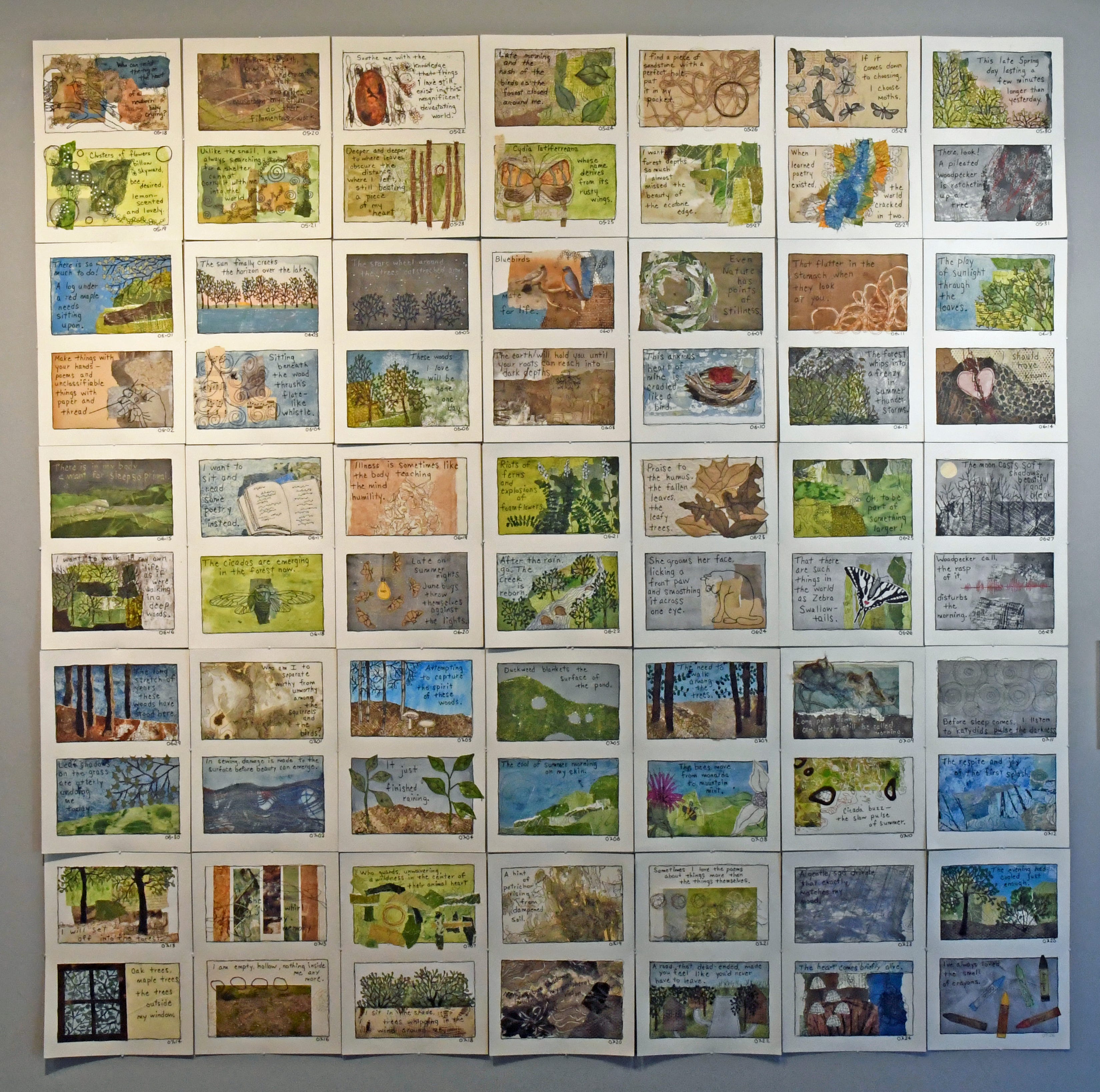
The work now contains multiple layers of time. There is the day on which each poem was written. There is the passage of years between the writing and the stitching. There is the slow, deliberate act of embroidering words by hand. And there is the gradual accumulation of 365 individual artworks, each connected to two specific days in the past - the one on which the poem was written, and the one on which the artwork was made. In a sense, I am collaborating across time with my former self. The words preserved moments that would otherwise have been forgotten. The stitching gives those moments a new physical form. Together, they revisit, again and again, the idea of a year.
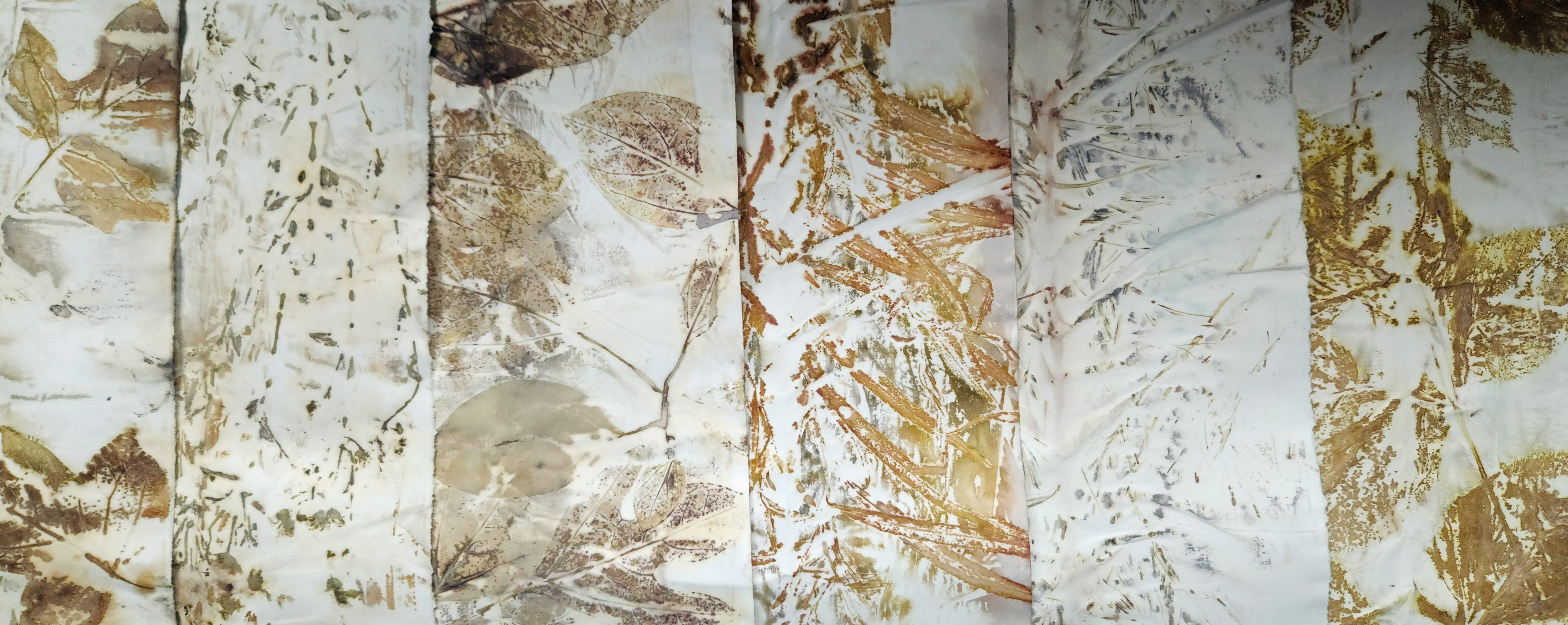
Recently, I’ve been creating naturally dyed embroidery threads from plants growing in the landscape around my home. In parallel, I’ve been making eco-printed papers using those same plants. At first glance, this might seem like a project about color or process or place. And it is. But increasingly, I realize it is also a project about time.
Plants are available on their own schedules, not mine.
Spring wildflowers appear briefly and vanish. Leaves emerge bright green, mature through summer, and change chemistry as autumn approaches. Late summer, a different set of flowers bloom. Tree nuts and twigs and bark exist through winter, after flowers and leaves have faded. Some plants produce useful dye material only during certain seasons. Others might reveal different colors depending on when they are harvested or what part of the plant is used.
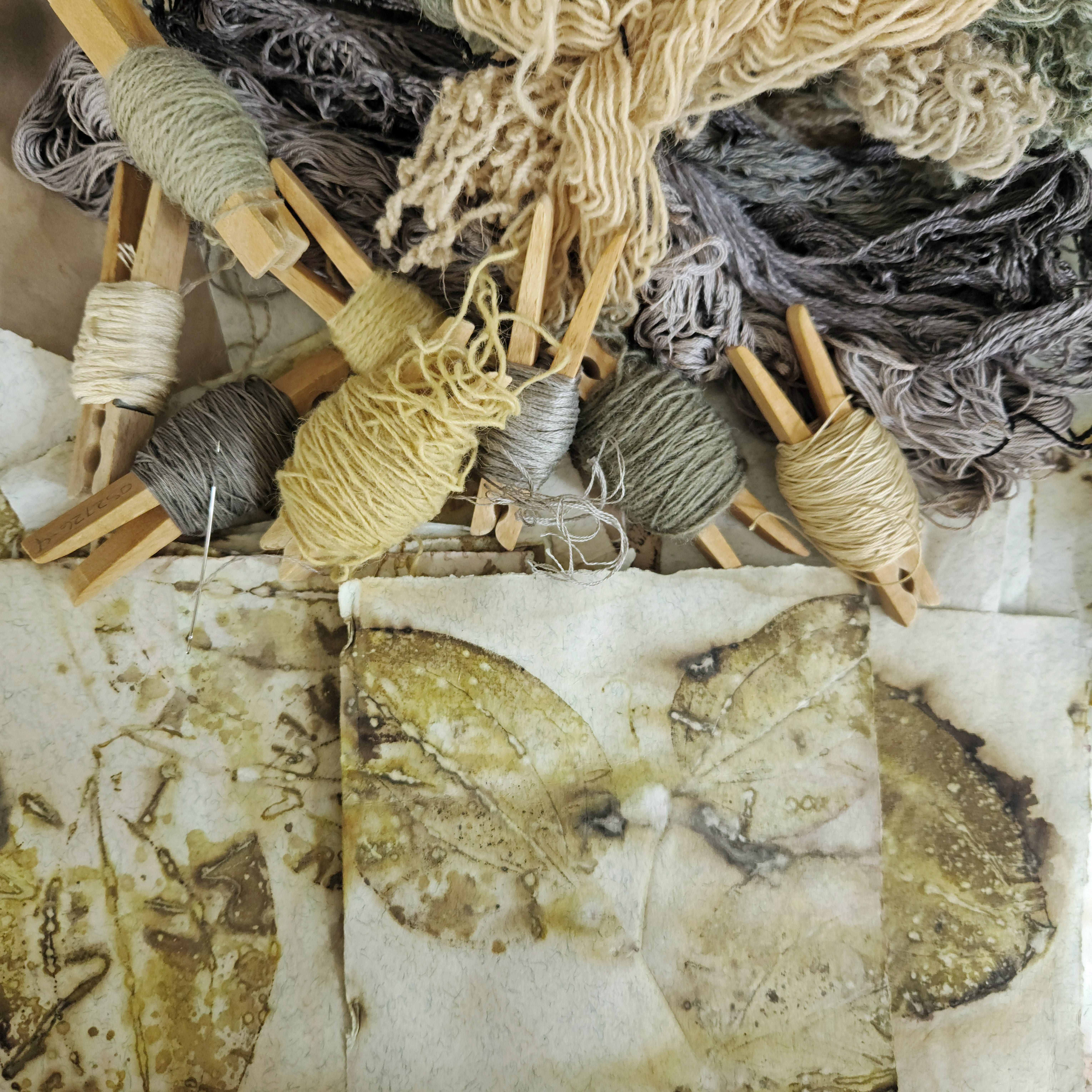
I cannot gather everything at once. Working with a landscape asks something different of me. It asks for patience, for observation. It asks me to become aware of time as a collaborator. It requires paying attention to what is available now and accepting what is not. If I miss a plant this season, I might have to wait for an entire year for it to come around again. The work unfolds according to the rhythms of the landscape itself.
Perhaps this is one reason I am drawn to nature-based work in the first place. Nature is always operating on timescales different than human convenience. Trees grow slowly. Forests mature over decades. Soil forms over centuries. Seasons arrive when they are ready. Similarly, I am slowly growing a collection of eco-printed papers and embroidery threads dyed with plants. I don’t yet know what the final artwork will look like, nor what this series will become. Only time will tell.
See more of my artwork at my website.
Reading this feels like entering a studio filled with sunlight and possibility. Every detail, every reflection, is shaped with such care and presence. I love how you invite us to consider time not as something slipping away, but as a medium to shape and hold, to slow down and truly see. Your words and images carry a quiet wonder that lingers long after I finish reading. Thank you for sharing your world with such honesty and depth. It’s a gift to journey through it with you.
I read every word. An offering of my time for yours. Thank you!